'%20stroke='%23FFFFFF'%20stroke-width='1.5'%3e%3ccircle%20id='Oval'%20cx='6.9820764'%20cy='5'%20r='4.25'/%3e%3cpath%20d='M0,18%20L0.394931775,15.5405897%20C0.784233891,13.1162378%202.87627751,11.3333333%205.33168755,11.3333333%20L8.60656395,11.3333333%20C11.0170079,11.3333333%2013.0843252,13.0531056%2013.5230481,15.4232875%20L14,18%20L14,18'%20id='Path-3'/%3e%3c/g%3e%3c/g%3e%3c/g%3e%3c/svg%3e)
'%20transform='translate(12.000000,%2011.000000)'%20stroke='%23FFFFFF'%3e%3cpath%20d='M14.9284847,2.86%20L16.4997013,17.3%20L0.777904514,17.3%20L2.30449259,2.86%20L14.9284847,2.86%20Z'%20id='Rectangle'%20stroke-width='1.4'/%3e%3cpath%20d='M5.04,2.88%20L5.04,0.25%20C5.04,0.111928813%205.15192881,-2.39230995e-18%205.29,0%20L11.99,0%20C12.1280712,4.09652979e-16%2012.24,0.111928813%2012.24,0.25%20L12.24,2.88%20L12.24,2.88'%20id='Path-2'%20stroke-width='1.25'/%3e%3c/g%3e%3c/g%3e%3c/g%3e%3c/svg%3e)








![/shop?suppliers[]=Doja](https://ik.imagekit.io/salve/wp-content/uploads/2023/02/17142721/DOJA-NEW.png?tr=f-webp)
![/shop?suppliers[]=Wizard%20Trees](https://ik.imagekit.io/salve/wp-content/uploads/2023/02/17142902/Wizard-Trees.png?tr=f-webp)
![/shop?suppliers[]=Super%20Dope](https://ik.imagekit.io/salve/wp-content/uploads/2023/02/17142844/super-dope.png?tr=f-webp)
![/shop?suppliers[]=Josh%20D](https://ik.imagekit.io/salve/wp-content/uploads/2023/02/17142823/JOSH-D-NEW.png?tr=f-webp)
![/shop?suppliers[]=UD+x+The+Flowery](https://ik.imagekit.io/salve/wp-content/uploads/2023/02/29062756/UD-Logo-for-Menu-Icon_BLK.png?tr=f-webp)
![/shop?suppliers[]=LitStick](https://ik.imagekit.io/salve/wp-content/uploads/2023/02/23071459/Litstick-drop-down-logo.png?tr=f-webp)
![/shop?suppliers[]=Maine+Trees](https://ik.imagekit.io/salve/wp-content/uploads/2023/02/15091555/Maine-Trees-website-drop-down.png?tr=f-webp)
![/shop?suppliers[]=Black+Box+Genetics](https://ik.imagekit.io/salve/wp-content/uploads/2023/02/17092953/BlackBoxGenetics_MenuTab_260x80.png?tr=f-webp)




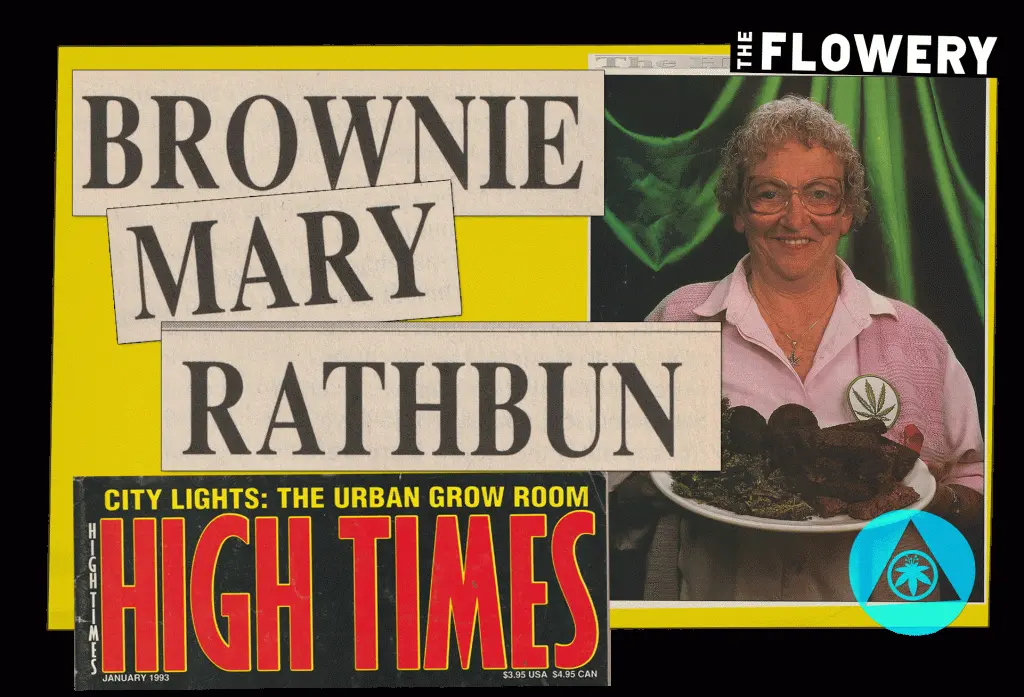
This week’s Wayback post comes from the January 1993 issue of High Times – an interview with San Francisco’s 70-year-old “Brownie Mary” Rathbun by Peter Gorman. Mary was an American medical cannabis rights activist (deceased, 1999). As a hospital volunteer at San Francisco General Hospital, she became known for baking and distributing cannabis brownies to AIDS patients. Her arrests would go on to generate interest in the medical community and motivate researchers to propose one of the first clinical trials to study the effects of cannabinoids in HIV-infected adults.
//
INTERVIEW: Brownie Mary Rathbun
San Francisco’s 70-year-old “Brownie Mary” Rathbun has been baking marijuana-laced brownies for more than 20 years. Until she was arrested in 1981, she baked them for profit, running a cottage industry out of her house. But when the AIDS epidemic broke out, she began giving them away to her sick and dying friends.
On July 21, 1992, she was arrested while baking brownies at a friend’s home in Sonoma, CA, and currently faces five years in prison. The bust has polarized the proponents and opponents of medical marijuana: Gene Tunney, the Sonoma County DA, has said he’s going to treat her like any other marijuana dealer, while the San Francisco Board of Supervisors declared August 25 “Brownie Mary” Day.
HIGH TIMES caught up with her while she was in New York to tape segments of ABC’s Morning News and The Maury Povich Show. In conversation, Brownie Mary is surprisingly street-smart and tough. Her speech was peppered with the names of friends and acquaintances who have died from AIDS, and she remains angry about the US government’s slow response to the crisis during the first several years of the epidemic as well as the continuing prohibition of medical marijuana.
by Peter Gorman
HIGH TIMES: How did you get involved in making pot brownies to give to people with AIDS?
MARY RATHBUN: I used to have a business selling my brownies in San Francisco. I was living—and still am—in a gay area of the city, so a lot of my customers were gay. Then, when the AIDS epidemic hit, a lot of the people I saw die were friends and former customers, so it was natural that I’d end up making the brownies for them.
HT: How do the brownies help?
MR: My kids—I call them all my kids—need them for the wasting syndrome; they need them for chemotherapy, and they need them for stress, just like I do.
HT: Do they work?
MR: They’re wonderful. If one of my kids takes half a brownie before chemotherapy, and afterwards eats the other half, within an hour of chemotherapy treatment he’ll be eating a huge lunch instead of being consumed with nausea. The ones who are terribly sick, they can eat a quarter or a half a brownie when they get up in the morning and it makes them feel a little better about themselves. It takes about an hour to kick in, if they eat it on an empty stomach, and then they say, “I think I can get up today; I think I can go out and run some errands today.” It gives them back some of the self-respect they’ve lost by being totally dependant on a visiting nurse or a Shanti person. That’s important.
HT: What is Shanti?
MR: Shanti is an emotional and practical support group for people with AIDS. I started working with them as a volunteer in 1983, not long after the epidemic broke out. I went to the kids’ houses and did their banking for them, brought them meals, went shopping, picked up their medicine. You know, did things for them they couldn’t do for themselves. Then Shanti rented an AIDS house, and after a while, several houses. A number of patients were moved into them, so their locations were kept totally confidential. Even in San Francisco, people would have freaked out if they knew there were ten people with AIDS living next door to them. I worked in the first Shanti AIDS house in 1984, cooking two nights a week. The kids all loved to see the old lady coming. I’d walk in with a few joints to pass before dinner, and a bottle of wine to have with dinner. Against the law, of course, so the kids smoked secretly.
HT: When did you switch from bringing joints to bringing brownies?
MR: When AIDS first hit we didn’t have the medicines we have now, like AZT and Pantanomine, so a lot of kids were dying fast from pneumosistis—pneumonia—and I thought it would be better for them to ingest the pot with brownies than to smoke it. Not that I objected to smoking—you do what you want when you have a diagnosis of death.
HT: How many friends have you lost to AIDS?
MR: Hundreds and hundreds. The saddest part about this whole epidemic—which is now a pandemic—is that it hit the gay community and the IV drug users first, the disposable people. So the government didn’t give a shit about people with AIDS, they thought it was god’s retribution, which was a load of crap.
HT: How do you deal with the pain of all the loss?
MR: I don’t know. It’s hard. Maybe it’s because my daughter died at such a young age and I went through all that grief. I don’t know. I got started with this at Shanti and you get involved and no matter how much it hurts you have to deal with it. You can’t just suddenly desert all these people who have been a part of your life for all these years because you can’t handle it.
One of my best friends, Terell, who I met at Shanti and have been working with for nine years at the hospital, he’s getting sick and he’s taken a leave of absence. And today was the first day that he wasn’t on the ward, working with me. I miss him greatly. But you cope with it. Another friend, John, who wants to go to court to testify for me, may not get there. He’s in bad shape. Maybe he’ll surprise us all, because he’s got that much optimism and strength. You would be surprised how much guts and internal fortitude these kids have when push comes to shove.
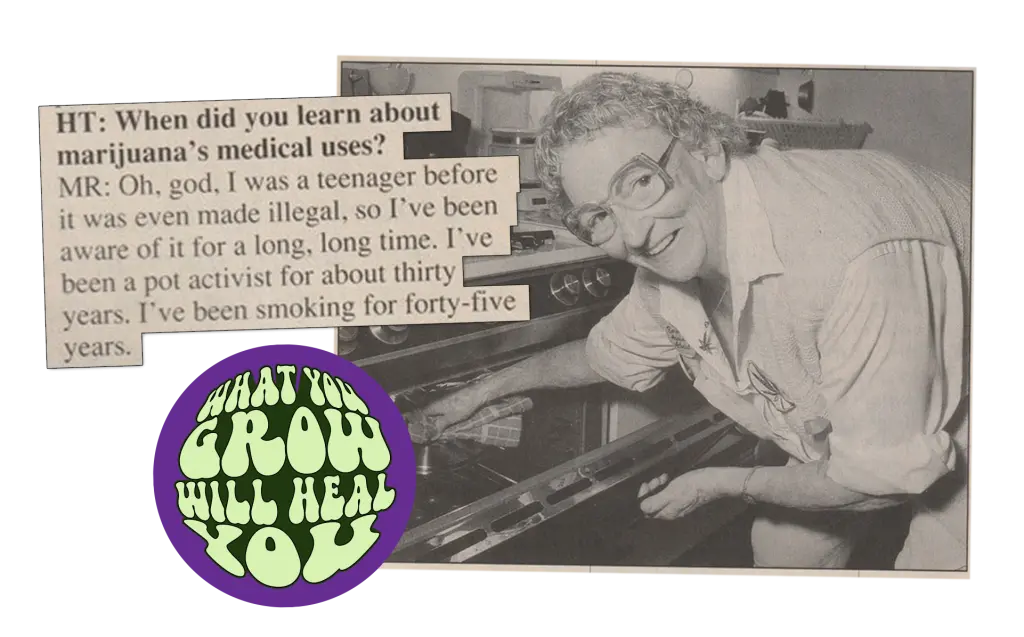
HT: When did you learn about marijuana’s medical uses?
MR: Oh, god, I was a teenager before it was even made illegal, so I’ve been aware of it for a long, long time. I’ve been a pot activist for about thirty years. I’ve been smoking for forty-five years.
HT: Where do you get the pot for your brownies?
MR: It’s all donated. People let me know they want to make a contribution, or just leave some with friends of friends. And when I get enough to make twenty or thirty dozen brownies, I make a batch. The worst thing is that I can’t make enough, so I have to play god, which I hate doing.
HT: How much pot goes into a batch of twenty dozen brownies?
MR: That’s part of my recipe and a secret. I’ve always thought I’d sell it to Betty Crocker when they make pot legal.
HT: In the years you’ve been baking free brownies, how much pot have you given away?
MR: I’ve baked thirty-five or forty dozen brownies every three or four months during the last nine years, so it’s easily hundreds of pounds. All donated for the cause.
HT: Tell me about the bust. How did it happen?
MR: We were busted on a Tuesday, at eight-twenty in the morning. Someone snitched on my friend Steve, who was holding some of the donations, the pot, for me. I was up in his kitchen baking when I heard the dogs start barking. I looked up and saw six cop cars pulling up, so I ran to Steve’s room—he works nights and was sleeping—and said, “Get up, I think we’re busted.”
HT: What did they find?
MR: They got just under two pounds of dope, so we were arrested and taken to Santa Rosa jail. Bail was set at five thousand dollars each.
HT: What are the charges against you?
MR: They’ve charged me with possession and possession for sale, and they’ve just added possession for distribution, I guess because I was going to give the brownies away. And the prosecutor, Gene Tunney, will probably add a charge of providing medicine without a license before he’s through.
HT: Sounds like he’s really going after you.
MR: He’s an ass. He thought he was going to make points behind me, but with all the attention the case has been getting, he’s probably wishing I’d just go away. But I’m not going to. They can’t drop all charges without saying I haven’t done anything wrong. And if they do that, I’m going to ask for my marijuana back.
HT: Have they offered you a deal?
MR: No, and I won’t take one.
HT: Why not?
MR: Because I wasn’t doing anything wrong. I was giving away brownies to help sick kids, and I will not cop a plea behind that. I won’t do it. The first time I was busted I was defiant, I told the narcs to go screw themselves. I just thought marijuana was wonderful, and that it cured all sorts of ills, so I pleaded guilty and continued baking my brownies. This time it’s an emotional issue. The Federal government should be paying me to make my brownies!
HT: Tell me about the first bust.
MR: That was in 1981. I was selling brownies out of my house in San Francisco. Then I sold to a narc behind a snitch. They got fourteen pounds of processed flour with marijuana in it, and three ounces of magic mushrooms. I was charged with eight felonies.
HT: Who was the snitch and why did they talk?
MR: It was a girl who’d ordered four hundred dollars worth of brownies at Christmas. She’d ordered them through a friend and she wanted them shipped to Florida, and I said alright. But she didn’t want to pay until she got them, and I said that was alright too because she was a friend of my friend. When she never paid me I called her and said she could either send me the money or I was going to come down there and kick her ass. Which was stupid, because four days later I got busted.
HT: How big was your cottage industry?
MR: I was employing wrappers at ten dollars an hour, sifters at eight dollars an hour. I had a good little business going. But then they busted me and cost the city, county and state beaucoup money to prosecute me, and with no good result. Two days after I got out of jail, I had a Christmas bake in the oven.
HT: How did the first case end?
MR: I got a thirty-day jail sentence, five hundred hours of community service and three years on seizure probation. The community service was supposed to be the hard part, but I was already working at a soup kitchen and a thrift store at the time. I’ve done volunteer work since I was thirteen. That was the way I was brought up, to give some of my free time to being a volunteer, whether that means serving food to the elderly or being active in the ERA movement.
HT: Do you still do volunteer work?
MR: I started working in San Francisco General Hospital in Ward 86, the gay ward, nine years ago. I X-rayed, run stats, that sort of thing.
HT: Did you ever serve your brownies at the hospital?
MR: No. Always in their homes. You can’t get hospitals or hospices involved.
HT: Have you done any brownie baking since the recent bust?
MR: No. But I’ve already been offered ingredients. And since that’s my job, that’s what I do, I’m going to continue.
HT: If you get exonerated?
MR: Before I get exonerated! But I have to find a new place to bake them. And I will. You can bet on that, honey.
HT: I’ve heard there may be a book about your life in the works. Any truth to that?
MR: About a year-and-a-half ago I got to thinking about the first bust and how funny it was, in retrospect—I mean, they missed almost everything I had stashed—and then a real good girl-friend, Josie Donohue, said she’d like to write the true Brownie Mary story. So we’ve been meeting every Monday morning for more than a year, taping anecdotes at her office, which is the beach. Of course, now that this bust has gone down we’ll have to add all these new chapters.
HT: How truthful will you be?
MR: I’d really like to tell the whole truth, but I suppose I’ll have to fudge a little to protect some people. Other than that it will be truthful. When we started the project, it was a gamble whether or not anyone would be interested. But maybe with this recent bust Josie can submit this project and get it sold so some people can learn what’s going on with the marijuana thing. Maybe that’s why the Marijuana Goddess picked me, to be a catalyst for the cause, to help get us on the way to getting medical marijuana.
HT: What do you think is going to happen with your case?
MR: I might have to go to jail.
HT: There’s always a chance they’ll drop the charges on the condition that you stop talking to the media.
MR: I wouldn’t make that deal with them. No way. I’m going to push them to a jury trial, and I’m going to be vindicated by the state of California.
HT: And if you lose?
MR: That’s my gamble. Then I’ll have to go to jail. And if I do, I’ll find some way to get my hemlock cocktail in there and then I’ll die a martyr and they’ll really be up shit’s creek. I’m that adamant. I know it sounds stupid and arrogant, but I will be damned if I’ll give in to their bullshit.
HT: How did you get to be so tough?
MR: I’m really not so tough. I’ve spent years creating this image of a tough old lady, but I blow it when I get emotional about my kids.
HT: Tell me something about yourself.
MR: I was born in Chicago, in December, 1922. I won’t give you a birthday. I left home at thirteen, finished high school, went to college and then came to California to chase men. I was going to be a psychiatric chick, but I found out I could make more as a waitress. So I did that for almost fifty years.
HT: Any marriages?
MR: I was married twice. Both ended up in divorce. I had one daughter, Peggy. She was born in 1955, and died in 1974, in an automobile accident. I was living in California at the time, and never did marry her father.
HT: What was Peggy like?
MR: Peggy was a real brain, a perennial school-goer. We were really good friends. It was a bad time in my life when she died. She was the one who bought me the marijuana-leaf pin I’m wearing, when she was twelve or thirteen years old.
HT: I’ve heard there was a scene at your arraignment over that pin…
MR: You bet there was. The judge, a woman, told my lawyer to get me to take it off. I haven’t taken it off in more than twenty years, and then this judge tells me I can’t wear it! My lawyer told her that I can wear anything I want, so long as it’s not dangerous to anyone there. I’ll be damned before I take it off! If Peggy was here now she’d be cheering me on all the way.
HT: There are plenty of people out there doing that right now.
MR: It’s amazing. People have been overwhelmingly supportive. I’ve been doing talk shows, radio shows, interviews. People stop me on the street, just to shake my hand and to tell me they support our medical marijuana issue. I recently spoke at a meeting of the San Francisco Board of Supervisors and I got a fucking standing ovation and they gave me a Brownie Mary Day. Which shows that people are sick of being lied to.
HT: Do you like all the attention you’re getting since the bust?
MR: Fame is not my cup of tea. The best thing about the bust is the reaction we’re getting to it. We’ve really caused a tremendous reaction. CNN went around the world with this story. And the people who call the shows I’ve done are almost all in favor of us. People understand this cause. These kids are sick and need medicine. I know marijuana works for my kids with AIDS. And people are denying it to them. The point I keep trying to make when I’m on those shows is that the people who believe the bullshit about how bad pot is for you have been lied to by their government, and they are perpetrating these lies.
HT: Who are you trying to reach when you do these shows?
MR: I want to reach everyone who doesn’t already know the truth about marijuana’s medical uses for AIDS, glaucoma, paralysis, cancer, and everything else it’s good for.
HT: What do you say to the people who don’t know?
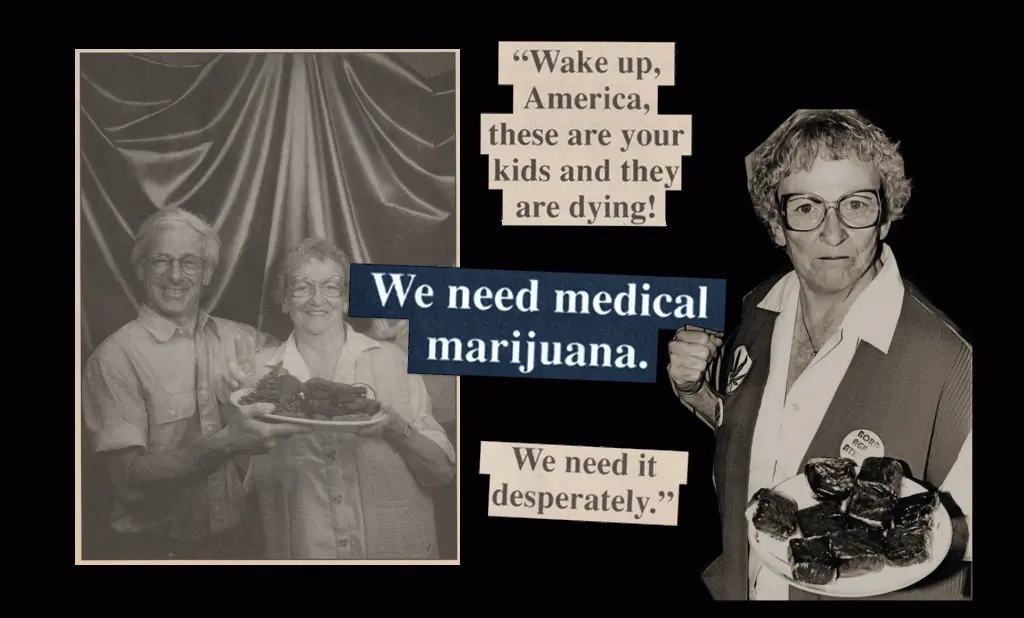
MR: Wake up, America, these are your kids, and they are dying! We need medical marijuana. We need it desperately.
† Mary Jane Rathbun (December 22, 1922 – April 10, 1999)